


Lotus Elite Sun Visor Mount – 1974-82
£20.00 ex vat
6 in stock
Description
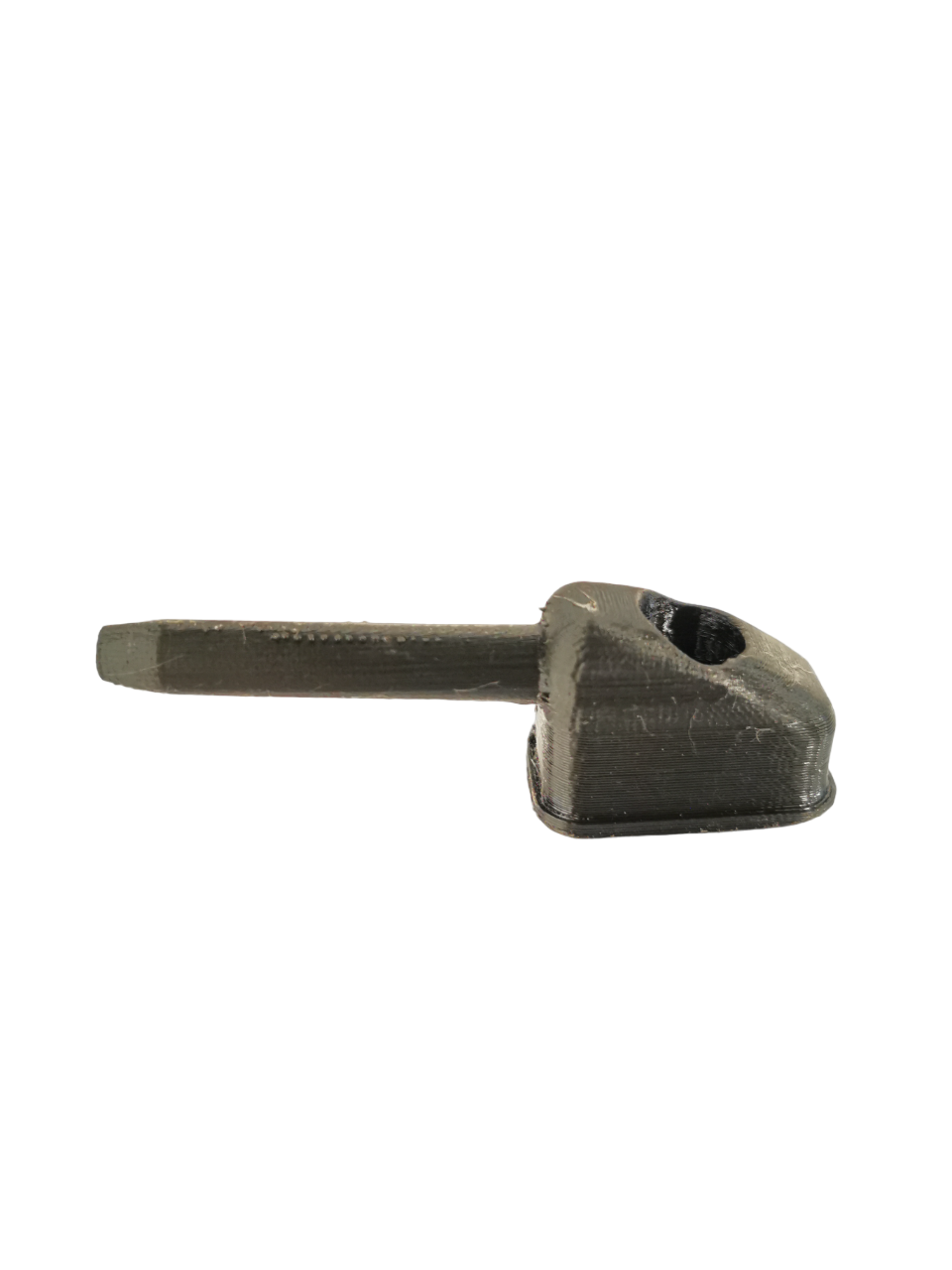
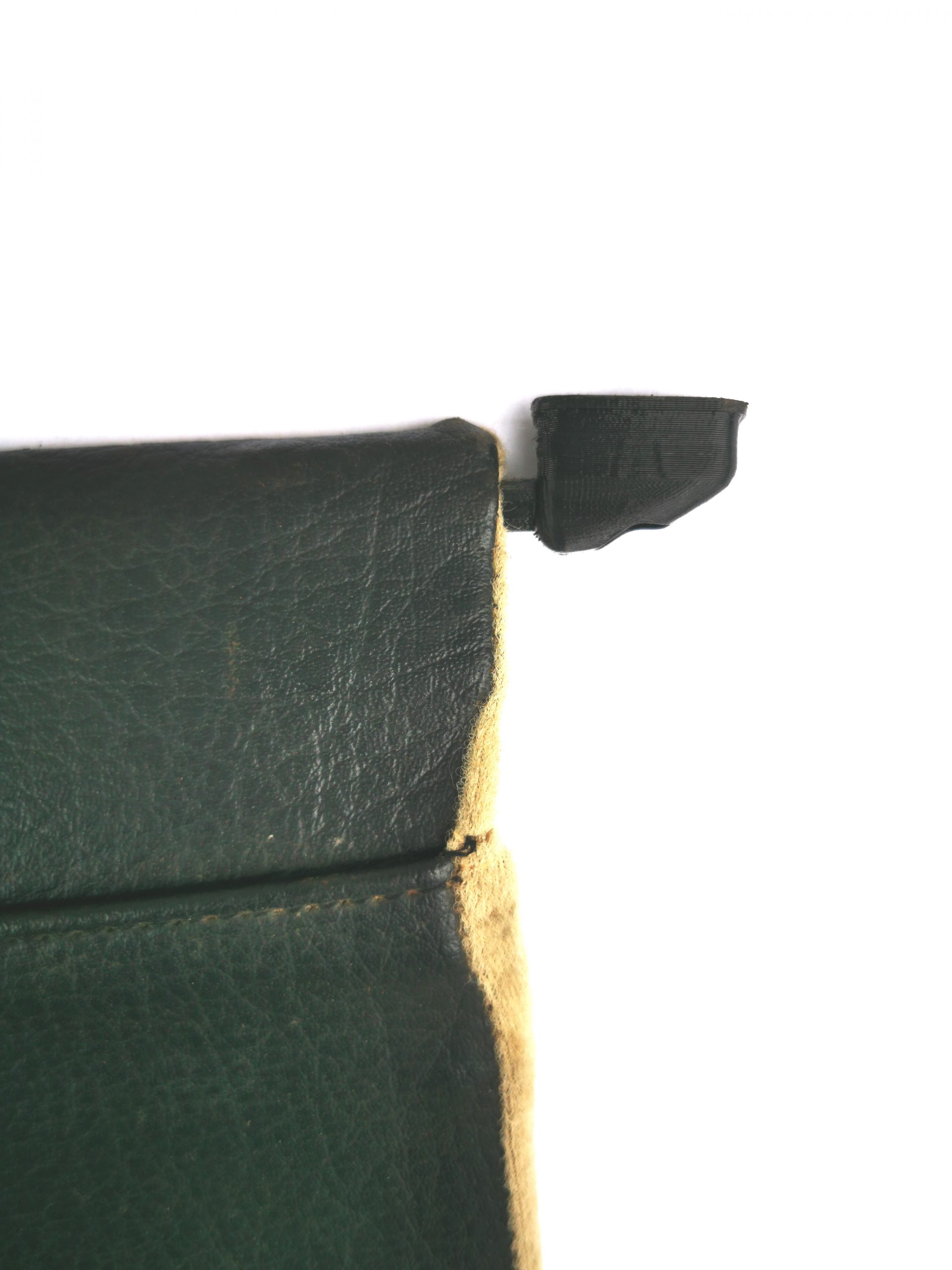
Lotus Elite Sun Visor Mounts Now Available! The original plastic mounts snap off very easily, so our new mounts have been 3D printed in Carbon-Reinforced Plastic, making them much stronger than the original ones. Each sun visor requires two of these mounts
You May Also Like:
Elite/Eclat 5 Speed Gearbox – Used
Why Not Follow Our Facebook Pages:
History:
From 1974 to 1982, Lotus produced the considerably larger four-seat Type 75 and later Type 83 Elite. With this design Lotus sought to position itself upmarket and move away from its kit-car past. The Elite was announced in May 1974. It replaced the ageing Lotus Elan Plus 2.
The Elite has a shooting brake body style, with a glass rear hatch opening into the luggage compartment. The Elite’s fibreglass bodyshell was mounted on a steel backbone chassis evolved from the Elan and Europa. It had 4-wheel independent suspension using coil springs. The Elite was the first Lotus automobile to use the aluminium-block 4-valve, DOHC, four-cylinder Type 907 engine that displaced 1,973 cc (120.4 cu in) and was rated at 155 hp (116 kW). With this engine the car does 0–60 mph (0–97 km/h) in 8.1 seconds and reaches a top speed of 125 mph (201 km/h). (The 907 engine had previously been used in Jensen-Healeys.) The 907 engine ultimately became the foundation for the 2.0 L and 2.2 L Esprit power-plants, the naturally aspirated 912 and the turbocharged 910. The Elite was fitted with a 4 or 5-speed manual transmission depending on the customer specifications. Beginning in January 1976, an automatic transmission was optional.
The Elite had a claimed drag co-efficient of 0.30 and at the time of launch, it was the world’s most expensive four-cylinder car. The Elite’s striking shape was designed by Oliver Winterbottom. He is quoted as saying that the basic chassis and suspension layout were designed by Colin Chapman, making the Elite and its sister design the Eclat the last Lotus road cars to have significant design input from Chapman himself.
Developement:
The Elite was available in four main variations, set apart by equipment levels: 501, 502, 503, and later on 504.
• 501 – “Base” version.
• 502 – Added air-conditioning to the base model.
• 503 – Added air-conditioning and power-steering.
• 504 – Added air-conditioning, power-steering and automatic transmission.
The Elite was the basis for the Eclat, and the later Excel 2+2 coupés.Although larger and more luxurious than previous Lotus road cars, the Elite and Éclat are relatively light, with kerb weights not much over 2,300 lb (1,043 kg).
In 1980 the Type 75 was replaced by the Type 83, also called the Elite Mark 2. This version received a larger 2,174 cc (132.7 cu in) Lotus 912 engine. The chassis was now galvanised steel and the five speed BMC gearbox was replaced by a Getrag Type 265 unit. The vacuum-operated headlights of the earlier model were replaced with electrically operated units and the Elite was now fitted with a front spoiler, a new rear bumper and brake lights from the Rover SD1.


